
The Weight of Wings
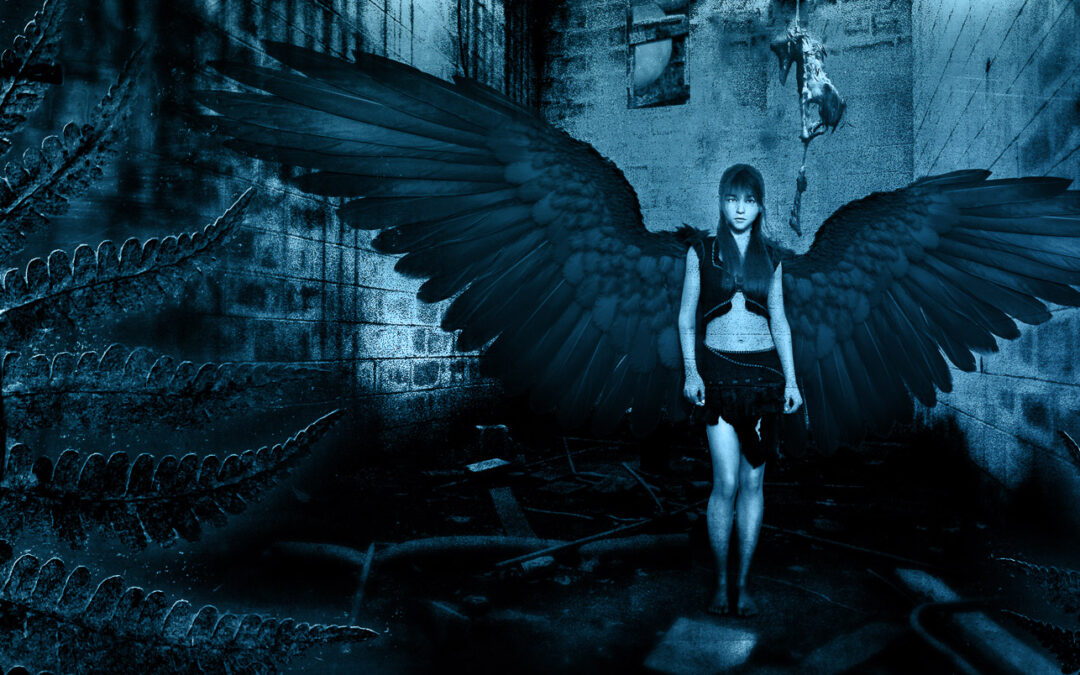
Some burdens are unseen, yet they shape us more than the ones we carry in our hands. In The Weight of Wings, a barefoot girl stands in the expanse of a cold, concrete room, her large, raven-like wings spread behind her. She is neither in flight nor fully grounded—caught in the liminal space between ascension and restraint. A single dead raven hangs in the background, suspended from a noose, a haunting echo of what came before or what is yet to come.
Her bare feet touch the hard floor, a quiet but deliberate connection to the earth. It is an intimate detail, a reminder that even with wings, she is tethered to something deeper. The starkness of her form against the grungy, blue-toned shadows reinforces a sense of solitude—her solemn expression speaking not of sorrow, but of contemplation, as though she is weighing the cost of flight.
To the left, a fern unfurls across the image, its delicate texture contrasting with the harsh, industrial space. It is a quiet interjection of life amid decay, a whisper of resilience in a scene heavy with finality. Above, the full moon watches, indifferent yet illuminating, its cool light slipping through the window like an omen.
There is a sense of inevitability in The Weight of Wings. The raven, the wings, the noose, the moon—they each tell a part of a story, one that is not about triumph or defeat, but about the burden of choice. To fly, to stay, to mourn, to transcend. The weight is hers to bear, and in the stillness, we are left to wonder: If given wings, would we soar—or would we find them too heavy to lift?
© 2025 Carl R. Cox. All Rights Reserved.